

Entries in Rivanna River (12)

Thursday
Aug182011

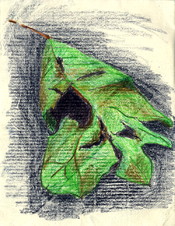
Tweets Illustrated: The Rivanna Rolls

William Theodore Van Doren. Pencil and watercolor pencil on paper, 5 x 5.

Saturday
Aug142010

North Fork, Rivanna

The river connects the lowest points on land, on its way to the deepest places on earth. I’m standing in the river, feet on the ocean floor.

Monday
May102010

Rivanna

River river river
End to end to end your name flows never-ending
River river river river
One part starts where one part starts where one part starts
River even backwards you’d be much the same
If only in a dream
End to end to end to end
Upriver
To the stream. 

Friday
Jan292010

Sunset, Friday, 29 January 2010

William Theodore Van Doren. Sunset from Stony Point, Albemarle County, Va. Oil on watercolor block, 16 x 20.

Perhaps a little snow in the offing. 

This was one of those days when water freezes in the ground and makes magic little ice caverns, or castles, underfoot – dense combs of gleaming, finely striated vertical ice crystals, just an inch or two tall, pushing up the red mud.

When I was a kid and encountered these on the walk to school, they seemed amazing. There was that sense of having discovered something new – I mean, really new – had anyone ever seen such a thing? After all, no one had ever said to me, “Listen, someday you’re going to run into these magic ice crystals in the mud – don’t get too excited, we already know about them.”

Quite a few things appeared that way – enormous roots bulging out of a creek bank might have been the most spectacular sight of its kind, for all I knew – and had anyone else ever been to this spot in the woods ... in all of human history? My brother Steve and I would find things like that and, like all great explorers, give them names. An abandoned gravel pit far off in the woods – I’m not sure how we managed to consider an abandoned pit something new, exciting and exclusively ours, but that was Frying Pan Canyon. An arena custom-made for throwing rocks.

Even something new only in the sense that it happened to be in a transient state or condition could feel like a discovery. If a bit of swamp froze over enough to allow a rare game of ice hockey – slapping a pine knot around with broken branches – that day of a frozen swamp qualified as something like an unprecedented and perhaps unrepeatable miracle.

Today by the Rivanna, after this week’s floods, Flint and I walked through large areas of woods that had been under water. Along the banks everything was covered in a heavy layer of silt (marbled with what looked like black sand – topsoil?) and small trees nearest the river were plastered all over their skinny branches with papier-mâché handfuls of leaves, twigs and mud. Flint was excited by the fresh stratum of earth; to a scent hound, it seems when there’s any new covering on the ground – snow, or in this case silt – it’s not so much that a place has changed in one aspect, the geography of scent is so different it’s an entirely new place.

Finding all the changes wrought by the flood, and being the first and perhaps only one to see them, at least here, was like the first time seeing ice in the mud. To be discovering things is very fine.

Monday
Jan252010

Sunset, Monday, 25 January 2010

William Theodore Van Doren. Sunset from Stony Point, Albemarle County, Va. Oil on watercolor block, 16 x 20.

Out today after last night’s deluge and the resulting floods, it was easy to see in the untracked mud that no one else had been in the “back thousand acres” of this place where we rent – in fact no one’s been back there since deer hunting ended three weeks ago.

(The Rivanna at flood, by the way, was amazing to see, close-up in the woods.)

The first thing I thought (smug) was, wow, I guess these guys never come back here if they can’t shoot at deer. But then I realized, wait a minute, what if we hadn’t gotten Flint (the foxhound), who needs to run? How often would we come back here – how often did we come here, before we found him (late 2001) at the Fluvanna County SPCA, convinced by the shelter’s benign speculation that he was a mellow half-Lab?

Answer: Almost never.

It’s not just hunters. A lot of us need another reason, or we just don’t seem to get out much anymore.

Friday
Nov132009

Sunset, Friday, 13 November 2009

William Theodore Van Doren. Stony Point, Albemarle County, Va. Oil on paper, 16 x 20.

Out on the long walk today, the rains having let up but the breezes still blowing from the trailing remnants of the storm (The Monster Nor’Easter That Ate Hurricane Ida), the woods and fields weren’t too wet – you could walk through the overgrown fields of pine without getting soaked by the turnstiles of the lower boughs. On the jeep trail plastered with oak leaves, with the air beginning to turn a little milder, there was a strangely pleasant vista of almost nothing but fallen light brown leaves converging ahead with the light gray sky – duotone all the way (except the occasional scrubby evergreen in the margins of the woods made it more like a tritone). Because of all the rain and wind we’ve been having (it’s raining again, very close to sunset – this storm doesn’t know the word quit), something about this ordinarily very dull vision of brown and gray felt happy and bright. As Flint and I got down toward the Rivanna, we heard the railroad at the Preddy Creek crossing less than a mile downstream – a singular definite roar I took to mean an Amtrak passenger train, versus the bumpy and elongated rumble of a freight.

I’ve seen many admirable paintings of this kind of dim gray-brown late fall or winter scene, but something is missing in them generally. It’s true that in what I saw and heard, nowhere was there visual evidence of any bright color – a broad swath of brilliant red or a line of electric turquoise. Yet it was there – I saw it anyway. My advice is, don’t let November fool you.